
| The Foundation |
 Purpose Purpose |
| Trustees |
| Secretariat |
| Committee
members |
| The Centre |
| History |
| Description |
| Location |
| The Activities |
| Current schedule |
| Past
activities |
| Last
principal conferences |
| Publications |
| Building Bridges through Music
Gaurav Mazumdar - a profile
|
| Scholars in residence |
| Recent samples of scholars' work |
| Study grant |
| Fellows |
| Dr.
B.G. Shrestha’s
experience |
| Links |
| Contact |
|
The Centre - History of the Houses and Plaque
Cliccare qui per la storia della casa e della lapide in italiano
The houses on the site of the Centre were built around the turn of the twentieth century. The Centre's orientation to 'Encourage Understanding, Resepect and Peace Internationally' is in tune with the ideals held by the Stinnes-Gaevernitz family. These resonate with aspiration of human beings found in all strata of society who pursue projects that assist in the furthering of human dignity and diversity. They often labour quietly and invisibly, to bring together the people of the earth.
The events that led to the end of the Second World War are commemorated on the plaque on the small pink house adjacent to the large rambling house of the actual Centro. They provide the setting and ethos of the Centro Incontri Umani.
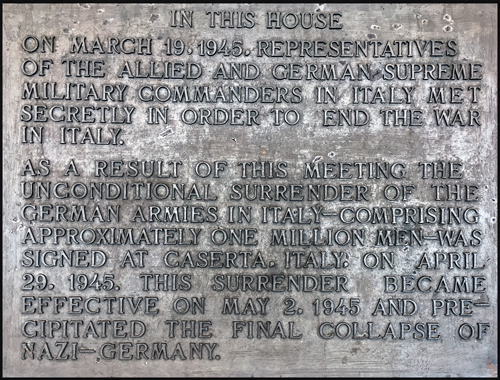 |
| The plaque memorializing the meeting that led to the surrender of the German armies in Italy. |
The End of the Second World War
The Stinnes - von Schulze Gaevernitz family involvement
 |
 |
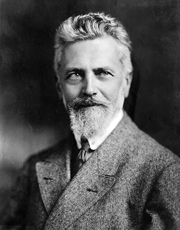
| Gerhard von S. Gaevernitz 1864-1943 |
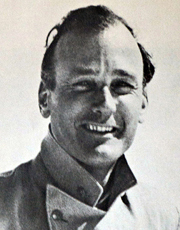
Gero von S. Gaevernitz 1901-1970 |
 |
 |
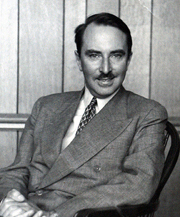
| Edmund Stinnes 1896-1980 |
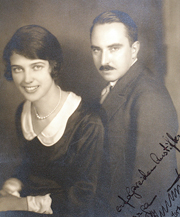
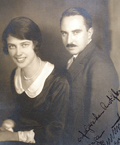
Edmund Stinnes 1896-1980, and Margianna Stinnes - S. Gaeverniz 1904-1989 |
'Sunrise' was the code name given to the diplomatic activities that led to the end of the Second World War. It is a thrilling story, of a small group of courageous men who met secretly in 1945 in Ascona, in the Italian-speaking part of Switzerland, to negotiate the ending of the war in Italy. They included Allen Dulles, member of the OSS (Office of the Strategic Services) and precursor of the CIA, of which he was director from 1953-61. Dulles had come to Switzerland specifically to gather information on how to support the resistance forces against the Nazis and Fascists. Other important participants at the meetings were Gero von Schulze Gaevernitz, Dulles's good friend and closest collaborator; General Max Waibel, a senior officer in the Swiss Intelligence; and senior Allied generals and Italian leaders of the military. General Wolff deserves special mention. He was Himmler's personal representative and commander of all SS troops in Italy, and hence crucial at the discussions. Swiss neutrality during the war meant they could maintain vital connections with both the German and Allied Intelligence.
Edmund Stinnes, a successful businessman and entrepreneur, born in Germany as the first son of Hugo Stinnes, made his home in Ascona especially available for these secret negotiations. Gero von S. Gaevernitz, of German Jewish descent and a naturalized American citizen, was the brother of Edmund's wife, Margianna Stinnes. His father Gerhart von Schulze Gaevernitz was a well-known professor of Political Science at Freiburg University. He had helped draw up the pre-Hitler Weimar Constitution and was liberally orientated, striving throughout his life for American-British-German rapprochement.
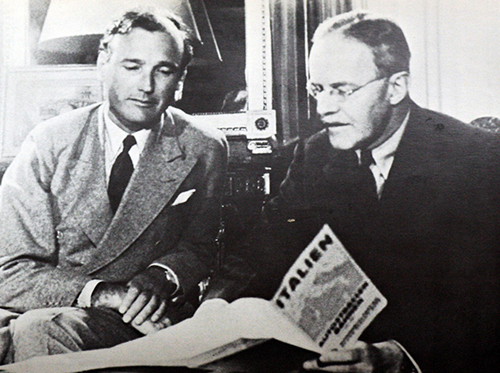 |
| Ascona 1945. Gero von S. Gaevernitz and Allen Dulles. |
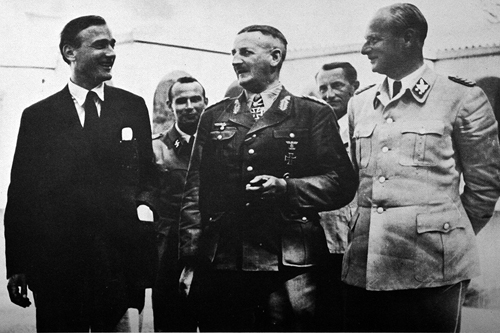 |
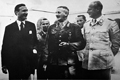
| German headquarters, Bolzano 1945. After the Secret Surrender. Gero von S. Gaeverniz, General Heirnich von Vietinghoff and General Wolff |
During the delicate negotiations General Wolff and other senior officials agreed to defy Hitler and Himmler's orders to 'scorch the earth'. Hitler's orders entailed the burning and destroying of the remnants of the industry and economy of Italy and the rest of Europe, even Germany itself. Through his charisma and close connection to senior members of the Resistance Movement in Germany, Gero von S. Gaevernitz was a key figure in the secret negotiations leading to the end of Second World War and concomitantly averting the 'scorching of the earth', and saving the lives of about one million men.
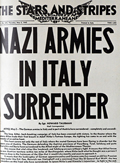
The entire process, referred to as 'Sunrise', was one of the most successful intelligence operations of our time. On 2 May 1945 Winston Churchill announced the first great German surrender in the Houses of Parliament, as Germany capitulated to the Allied forces. Churchill declared 'the war against Fascism and Nazism on that front is over'.
Angela Ruth Hobart and Maya
This brief account of events is drawn from The Secret Surrender by Allen Dulles, Harper and Row Publishers, New York, First Edition, 1966.
 |
 |
|
|
|